
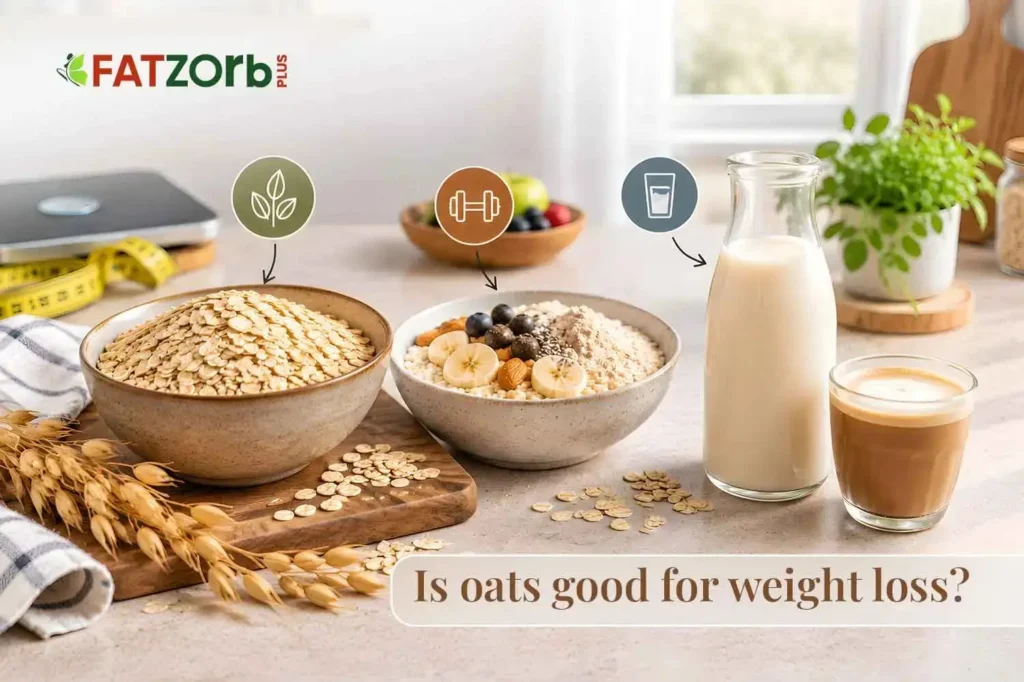
If you are standing in the oats aisle trying to choose between rolled oats, instant packets, protein oats, and oat milk, the labels all sound like they will help you lose weight.
They will not do that in the same way.
Oats can support fat loss because they are filling, modest in calories when measured, and rich in dietary fiber. The type you buy still matters. So do the toppings, the pour of oat milk, and whether the packet is plain or sweetened.
This guide compares the main options, explains why plain rolled oats are the best everyday default for most people, and shows how to eat them without turning a “healthy breakfast” into a 500-calorie dessert.
Quick answer: Are oats good for weight loss?
Yes. Oats can support weight loss when the serving stays measured and the bowl is not loaded with sugar.
A typical 40 g serving of dry rolled oats has about 150 calories, 5 g protein, and 4 g fiber. The soluble fiber in oats, mainly beta-glucan, slows digestion, steadies blood sugar, and helps you stay full longer. That makes it easier to eat fewer calories later in the day.
Rolled oats are usually the best default because they keep their fiber, contain no added sugar, cook in 5–10 minutes, and cost less than most protein-oat blends. They only help inside a calorie deficit. Oats do not burn fat on their own.
Why oats help with weight loss
Oats are useful for fat loss for three practical reasons, not because they are a magic food.
1. Fiber increases fullness
Beta-glucan forms a gel in the gut. That delays stomach emptying and can raise satiety hormones such as peptide YY. People often eat less at the next meal without trying as hard to “be good.”
2. The calorie cost is predictable if you weigh the dry oats
Forty grams of dry rolled oats is a clear portion. The problem starts when the serving becomes “however much looks right in the pot,” then banana, honey, peanut butter, and sweetened oat milk go on top.
3. Blood sugar rises more slowly than it does with many breakfast cereals
A slower glucose rise means fewer mid-morning crashes that send you to snacks. Instant flavored oats are the exception. They are more processed and often sweetened, so they behave more like cereal than like whole oats.
Oats also supply plant protein, magnesium, iron, thiamine, and other minerals. Those extras support a balanced diet. They are not the main weight-loss mechanism. Appetite control plus a calorie deficit is.
Types of oats, explained
Before choosing a “winner,” it helps to know what each product actually is.
Steel-cut oats
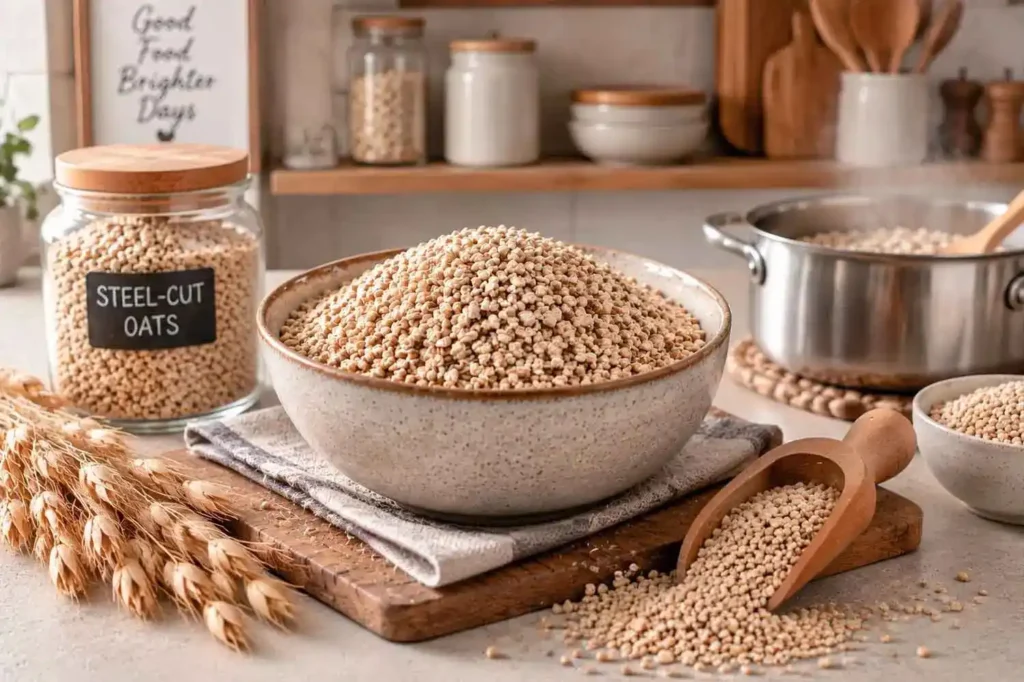
Steel-cut oats are whole oat groats chopped into pieces. They are the least processed common option, take 20–30 minutes to cook, and have a chewy texture.
They usually have the lowest glycemic impact of the standard oat types. Fiber and protein per gram are close to rolled oats. If you have time, or you batch-cook them, steel-cut oats are excellent for weight loss. They are not more “fat-burning.” They are just slower to digest and harder to turn into a sweet instant packet.
Rolled oats (old-fashioned oats)
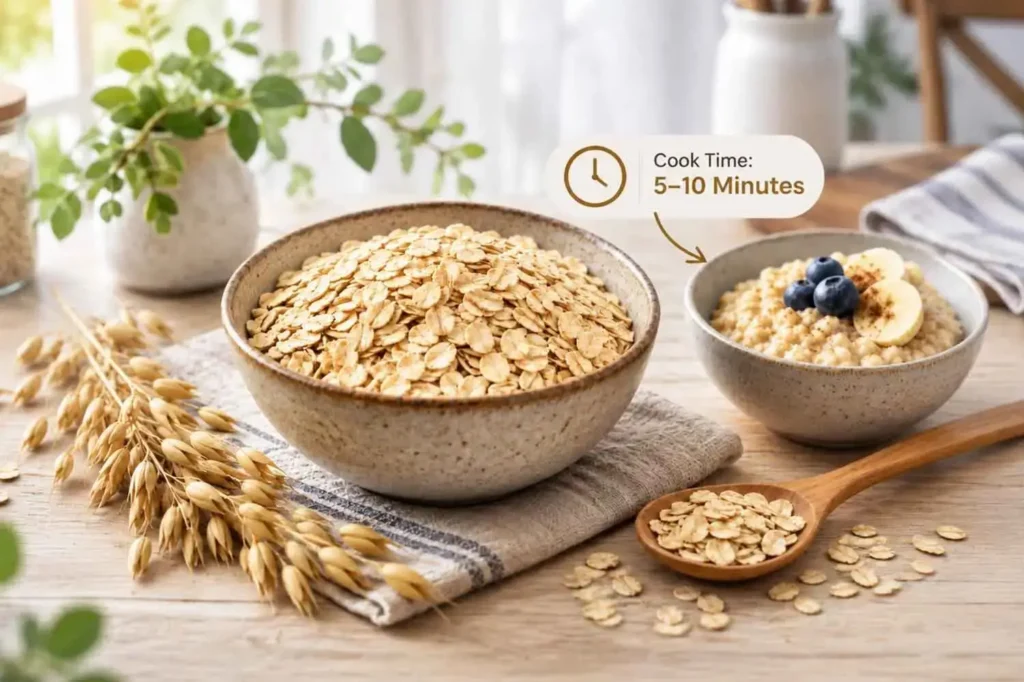
Rolled oats are oat groats that have been steamed and flattened. They cook in about 5–10 minutes, work in overnight oats, and keep most of the grain intact.
This is the most useful everyday option: cheap, widely available, unsweetened, and flexible. For most people trying to lose weight, rolled oats are the best balance of nutrition, convenience, and control.
Instant or quick oats
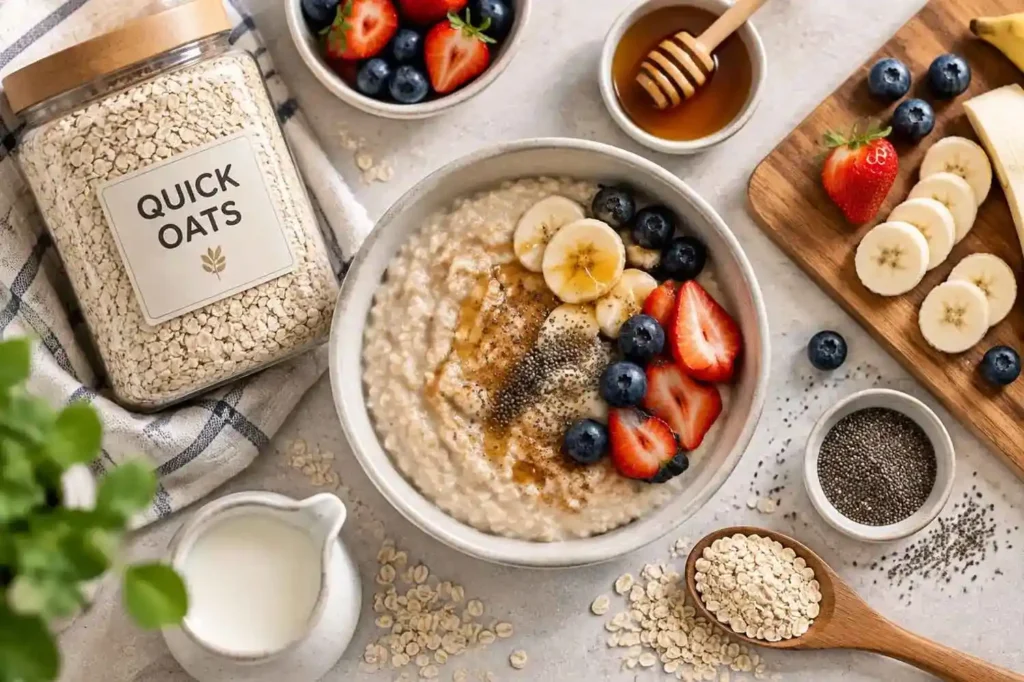
Instant oats are rolled thinner and often pre-cooked, so they soften in a minute or two. Plain instant oats have a similar calorie, protein, and fiber profile to rolled oats.
Two differences matter:
- They typically have a higher glycemic index, around the high 70s, versus the low-to-mid 50s for rolled oats.
- Flavored packets often add sugar, salt, and flavoring.
Plain unsweetened instant oats are acceptable when you are short on time. Flavored packets are a poor default for fat loss.
Protein oats
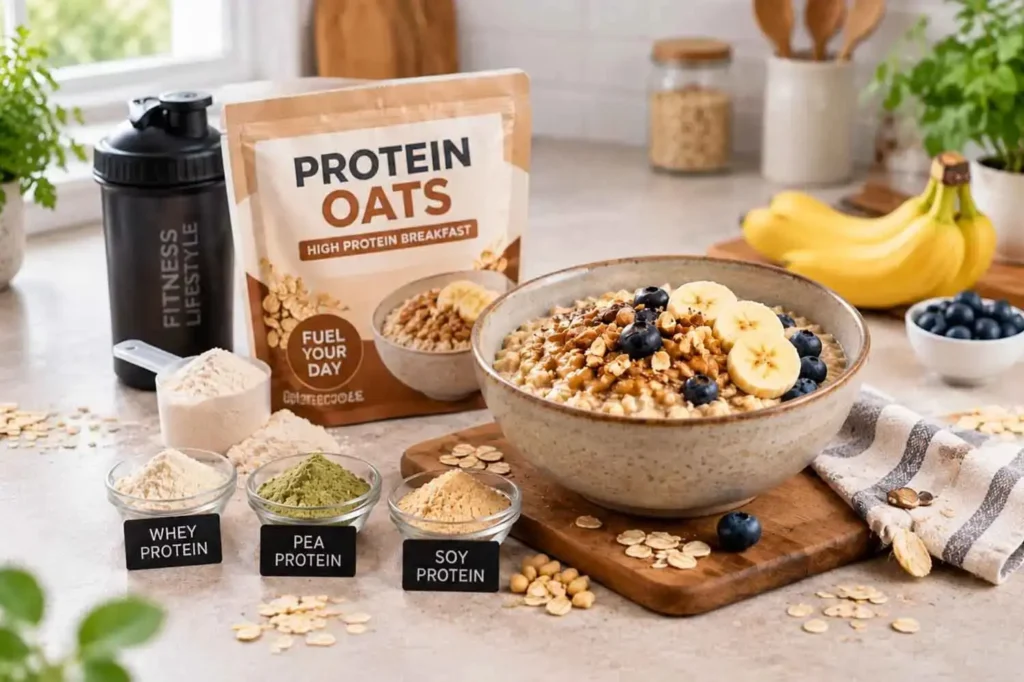
“Protein oats” is a marketing category, not one food.
There are two versions:
Added-protein oats: regular oats blended with whey, pea, soy, or milk protein. Protein per serving can jump to 10–20 g. Some brands also add sugar, flavoring, or thickeners.
Naturally higher-protein oats: a different oat variety milled as rolled oats, with more protein in the grain itself and no powder. Bob’s Red Mill Protein Oats is the best-known example, with about 9–10 g protein per serving versus about 5–6 g in standard rolled oats.
Added-protein oats can help if you struggle to hit a protein target at breakfast. They are not automatically better for weight loss. Read the label for added sugar and serving size. You can get the same protein bump by adding Greek yogurt, milk, egg whites, or a scoop of unsweetened protein powder to plain oats.
Oat milk
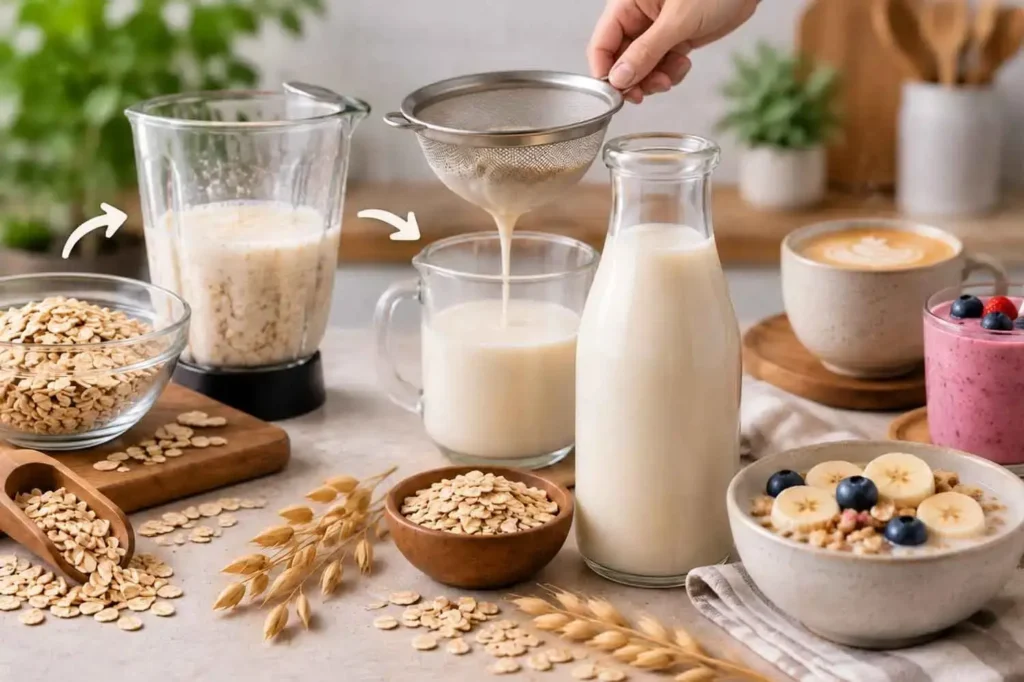
Oat milk is oats blended with water and strained. Most of the fiber is removed with the solids. Many barista and flavored cartons add oil and sugar.
Oat milk is a dairy alternative for coffee, smoothies, or a splash on cereal. It is not a substitute for a bowl of whole oats. If weight loss is the goal, unsweetened almond milk, skim milk, or low-fat dairy will usually fit a bowl better than a large pour of oat milk.
Nutrition comparison
Values are typical, not identical across every brand. Use the label when it disagrees.
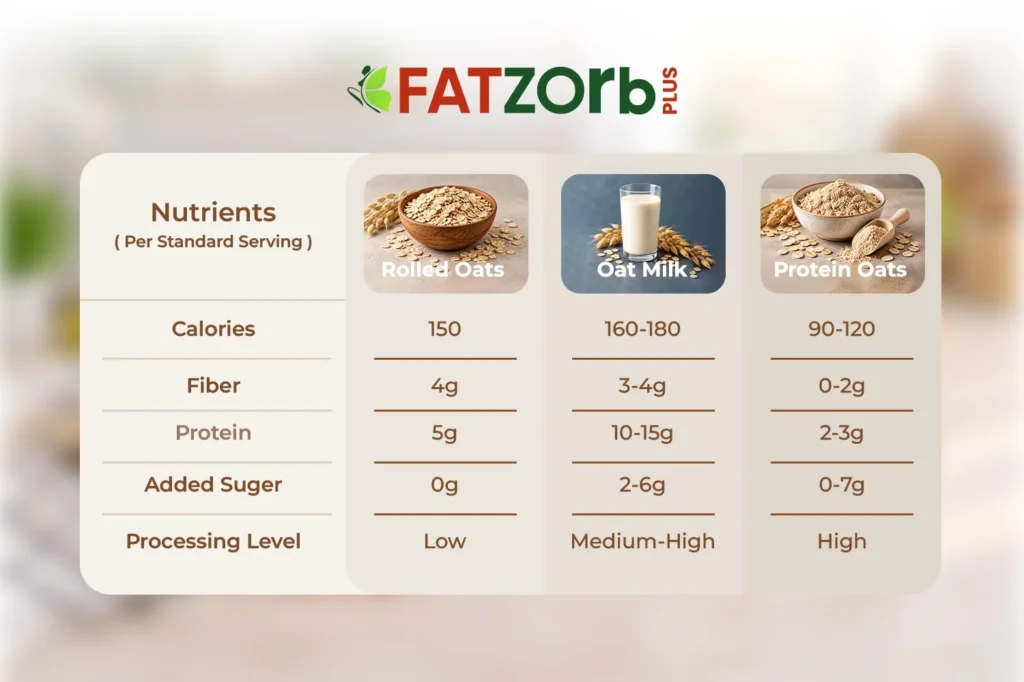
The pattern is simple. Whole oats keep fiber. Drinks and flavored packets lose fiber or add sugar. Protein products win on protein only if the rest of the label is clean.
Rolled oats vs protein oats vs oat milk
These three sit next to each other in a lot of shops, so they are worth a direct comparison.
Fiber and fullness
Rolled oats keep the most useful fiber for appetite control. Protein oats usually keep a fair amount, depending on how much powder or flavoring is mixed in. Oat milk loses most of the fiber during straining. That is why a latte made with oat milk does not replace breakfast oats.
Protein
Protein oats win on the label. That helps after training or on days when the rest of your meals are light on protein.
Plain rolled oats can match that number without a premium packet:
- 40 g rolled oats + 150 g plain Greek yogurt ≈ 18–20 g protein
- 40 g rolled oats cooked in 200 ml skim milk ≈ 12 g protein
- 40 g rolled oats + 1 scoop unsweetened protein powder ≈ 25 g+ protein
If a protein-oat brand is unsweetened and you like the taste, it is a convenience product. It is not nutritionally mandatory.
Sugar and processing
Plain rolled oats have no added sugar. That is their clearest advantage.
Protein oats and oat milk vary. Some are clean. Many are not. If sugar appears in the first four ingredients, the product is working against the satiety benefit of oats.
Verdict for this comparison
Rolled oats: best default for weight loss.
Protein oats: useful add-on when the label is clean and you need more protein.
Oat milk: fine as a drink; weak as your oat strategy.
Steel-cut oats can edge rolled oats on glycemic response. They lose on speed. For most weekday breakfasts, rolled oats still win.
Why rolled oats are the best everyday choice
When people ask which oats are best for weight loss, rolled oats come out ahead for most households for three reasons.
They are filling enough
The grain is still intact enough to digest slowly. You get chew, volume after cooking, and beta-glucan without a 30-minute pot.
They are easy to control
One ingredient. Zero added sugar. You decide the toppings. Instant flavored packets decide them for you.
They fit more recipes
Breakfast bowls, overnight oats, homemade granola, savory oats, meatballs, pancakes. A food you will actually eat all week beats a “perfect” grain that stays in the cupboard.
Steel-cut oats are the better pick if you prefer them and will cook them. Rolled oats are the better pick if you want the option you will repeat.
How to eat rolled oats for weight loss
Buying the right box is step one. Building the bowl is what decides the result.
Best time to eat oats
Breakfast is the most useful slot because oats set a steadier blood-sugar tone for the morning. A small serving also works as a pre-workout meal.
A bowl at night is fine if it fits your calorie target. Oats do not become fattening after 8 p.m. Oversized toppings do.
Ideal portion
Start with 40–50 g dry rolled oats, about 1/2 cup.
That is roughly 150–190 calories before extras. Cook them in water if you want the lowest-calorie bowl. Cook them in skim milk or add yogurt if you want more protein.
Do not eyeball “a big mug.” Dry oats look small and expand. That is how a 150-calorie base becomes 300 calories before toppings.
Build a bowl that stays under control
A practical fat-loss bowl:
- 40 g rolled oats
- 200 ml water or 150–200 ml skim milk
- 100 g berries
- 100–150 g plain Greek yogurt, or 1 egg / egg whites on the side
- cinnamon, chia, or ground flax
- optional: 1 teaspoon nut butter, not a heaping spoon
Approximate totals with water, berries, and 150 g nonfat Greek yogurt: about 300–330 calories and 18–20 g protein. That is a meal, not a snack with extras piled on.
Toppings that help
- Fresh berries or a small sliced banana
- Plain Greek yogurt or skyr
- Cinnamon, vanilla, cocoa powder
- Chia seeds or ground flax, 1 tablespoon
- A measured teaspoon of nut butter
Toppings that quietly stop fat loss
- Brown sugar, honey, maple syrup “just for taste,” then another pour
- Flavored syrups and sweetened oat milk
- Large handfuls of dried fruit
- Store-bought granola
- Two tablespoons of peanut butter plus chocolate chips
Nut butter is not the enemy. Unmeasured nut butter is.
A simple weekly way to use rolled oats
Use one base so you do not get bored and order breakfast out.
Monday: 40 g oats, berries, cinnamon, Greek yogurt
Tuesday:savory oats with spinach, tomato, and an egg
Wednesday:overnight oats with chia and kefir or yogurt
Thursday:40 g oats cooked in skim milk, cocoa powder, raspberries
Friday: protein-boosted oats if you trained that morning
Keep the dry oats constant. Rotate protein and fruit. That is enough variety for most people.
Common mistakes that sabotage oats for weight loss
Treating oats as calorie-free health food
They are a whole grain, not a free food. Two dry cups is a large meal.
Drowning the bowl in sweetened oat milk
You came for fiber and left with a cereal drink.
Using only flavored instant packets
The convenience is real. The added sugar is also real.
Skipping protein
Oats alone are moderate in protein. Without yogurt, milk, eggs, or a clean protein add-in, hunger often returns before lunch.
Adding “a little of everything
Banana plus honey plus peanut butter plus granola plus oat milk can push one breakfast past 600 calories. The oats were not the problem.
Expecting oats to create a deficit
If dinner is large, snacks are frequent, and steps are low, a perfect bowl of rolled oats will not offset that.
Rolled oats win the everyday choice
Oats can support weight loss. The type you buy changes how easy that is.
Plain rolled oats are the best everyday choice for most people: enough fiber, no added sugar, steady energy, and a portion you can measure. Steel-cut oats are at least as good if you like them. Protein oats help only when the label is clean and you need the extra protein. Oat milk belongs in coffee, not in place of the bowl.
Keep the serving at 40–50 g, add protein, keep toppings boring on purpose, and let the rest of your day stay in a modest calorie deficit. That is the entire strategy. The box cannot do more than that. For more info about weight loss tips visit our blog.
Eating oats in a measured portion with enough protein is one of the simplest and most sustainable weight loss habits. If you want extra support for your routine alongside a healthy diet, you can explore Fatzorb Plus, designed to be used with a balanced diet and an active lifestyle.
Frequently asked questions
What are the health benefits of eating steel-cut oats daily?
Eating steel-cut oats daily supports heart health, digestion, blood sugar control, and weight management. They are rich in beta-glucan fiber, which helps lower LDL cholesterol and keeps you full longer. Their low glycemic index also gives steady energy without sugar spikes.
How to cook steel-cut oats on a stovetop?
To cook steel-cut oats on the stovetop, boil 4 cups of water, add 1 cup of oats, then simmer on low for 20-30 minutes, stirring occasionally. Cook until creamy and tender, then let them rest for 5 minutes before serving. Add a pinch of salt for better flavor.
What are the nutritional benefits of eating rolled oats?
Rolled oats are packed with fiber, plant protein, and essential nutrients like manganese, magnesium, iron, and B vitamins. Their beta-glucan fiber supports heart health, lowers cholesterol, and keeps you full for hours. They are also naturally low in fat and provide steady energy for better weight and blood sugar control.
What type of oats is most effective for weight loss?
Steel-cut oats are the most effective for weight loss, as they digest slowly, have the lowest glycemic index, and keep you full the longest. Rolled oats are a close second and more convenient, while instant oats are less filling because they digest faster.
Which types of oats are best for making overnight oats?
Rolled oats (old-fashioned oats) are the best type for overnight oats, as they soften perfectly in 6-8 hours while keeping a creamy, chewy texture. Quick oats give a softer, thicker result, while steel-cut oats stay very chewy and need longer soaking. Instant oats turn mushy, so avoid them.